Wednesday, May 25, 2016

Wednesday, May 18, 2016
My review of The Midnight Watch (A Novel of the Titanic and The Californian) by David Dyer
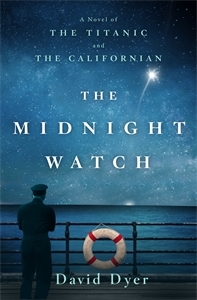
As the Titanic and her passengers sank slowly into the Atlantic Ocean after striking an iceberg late in the evening of April 14, 1912, a nearby ship looked on. Second Officer Herbert Stone, in charge of the midnight watch on the SS Californian sitting idly a few miles north, saw the distress rockets that the Titanic fired. He alerted the captain, Stanley Lord, who was sleeping in the chart room below, but Lord did not come to the bridge. Eight rockets were fired during the dark hours of the midnight watch, and eight rockets were ignored. The next morning, the Titanic was at the bottom of the sea and more than 1,500 people were dead. When they learned of the extent of the tragedy, Lord and Stone did everything they could to hide their role in the disaster, but pursued by newspapermen, lawyers, and political leaders in America and England, their terrible secret was eventually revealed. The Midnight Watch is a fictional telling of what may have occurred that night on the SS Californian, and the resulting desperation of Officer Stone and Captain Lord in the aftermath of their inaction.
Told not only from the perspective of the SS Californian crew, but also through the eyes of a family of third-class passengers who perished in the disaster, the narrative is drawn together by Steadman, a tenacious Boston journalist who does not rest until the truth is found. The Midnight Watch is a powerful and dramatic debut novel--the result of many years of research in Liverpool, London, New York, and Boston, and informed by the author's own experiences as a ship's officer and a lawyer.
My review:
Parts of this book were really good and others seemed to drag on a bit too long. It read sort of like a whodunnit mystery, but without the red herrings. The many lies and the cover-up testimonies were interesting to read about because the stories kept changing. No one wanted to admit to anything that would make them the cause or contributor to the tragedy and such a great loss of life. I liked reading most of the novel from the point of view of a newspaper reporter. At the same time, I didn't feel like their was enough about the Titanic tragedy itself, as the plot was more focused on the Californian.
Now, technically I understand the intention was to focus on the inaction of the other ship when they saw the rockets, which makes the Titanic's story all the more tragic because the boat was only ten or so miles away and could have saved a good number of passengers had they done something. The feeling I got at the conclusion of this book was more like I'd been reading depositions of the Nazi leaders and their testimonies of their participation in international war crimes at the Nuremberg Trials. So if you find that approach a bit dry, you might not stick with this book until the end.
My favorite part of the story was when the author showed the last hour of the Sage family's life. It was an intriguing perspective of how a large family with nine children might have dealt with the ship's sinking as a unit. Since the eleven member family actually died when the ship disappeared under water, I found it especially intriguing that not one of them survived. They didn't want to be separated even if that meant they could live, and that was an emotional part of the book for me. As a family they fought to stay together despite the hopelessness of their situation. Such a tragic ending.
All in all this was a decent story. Would I rave about it and recommend it to friends? Probably not. But that's just my opinion. What makes a Titanic themed story intriguing is the tragedy and experiencing the events as if you were there as the ship went down. The book did include some of these scenes, but most of the story was about digging up the facts and trying to get to the truth. That's the part that dragged on longer than necessary.
The Midnight Watch was published by St Martin's Press and released in 2016.
Saturday, May 07, 2016
My review of Jump by Michel Sauret

Christopher took his first leap of faith at the age of five. He jumped off the tree in his backyard, right into his father’s arms. It was only the first branch up, but his father ruffled his hair, held him tight and said he had the faith of a boy twice his age. Each year on his birthday, Christopher takes another jump. Each time, a little higher up that tree. Land safely, and he might earn God’s pleasure. But one year, Christopher breaks his leg, and suddenly it’s his little sister who seems to please their parents best.
Distance grows between him and his father, especially as a sexual addiction takes root in his heart, launching him into a dangerous free-fall. Desperate for escape, Christopher looks to college, thinking he might find God on his own terms. Yet as he becomes entrenched in the secular haven of higher education, he discovers the “Cathedral of Learning” is no more of a savior than a tree. He flees once more, hitchhiking with an atheist set on his own spiritual journey. But as they end up in Selma, Alabama, Christopher and his new friend land in a church that won’t let them get away.
My review:
This was a compelling book. I have read a number of literary novels, but this is extraordinary literary fiction. It was well written but didn't leave me feeling depressed as some secular novels have done. Similar Christian books with female characters (regarding tragedy and the ultimate search for God) Into the Free by Julie Cantrell, and Watching the Tree Limbs by Mary Demuth. Some others I enjoyed are Words by Ginny L Yttrup and Pocketful of Pearls by Shelley Bates.
This book features a main character that is a young man who is growing up and trying to find his way in the world. He is searching for a place to belong, and although he had quite a variety of religion in his background, some of what he learned was messed up. At the same time there were checks in his heart when obvious false teaching came into play. Similarly themed books about young men written in a literary style are From the Dead by John Herrick and Between these Walls by John Herrick. I loved both of those books.
The fact that Jump is a Christian novel makes it that much more compelling to me because I love reading books with a spiritual element; especially the kind that drives many of us to search for that missing piece (peace) in our lives.
Some people might find the reality of this man's struggles to be a bit too edgy for them, but I loved it. I really, really did. There is simply not enough realistic emotion embedded in tragic tales written by Christian authors, though they do exist. Too many authors tend to lean toward the conservative end to sell their stories to bigger publishing houses, but stories like this really speak to people's hearts. I can't say much about this book without giving away spoilers, but I will say it was very easy for me to relate to this character and the issues he faced. Wonderful literary fiction. I highly recommend it.
Jump was published by One Way Street Productions and released in 2016. You can buy it HERE,
Subscribe to:
Posts (Atom)

Share this post
